The Butterfly Effect: How Small Actions Can Have Big Consequences =================================================================The butterfly effect is a fascinating concept that has captured the imagination of scientists, philosophers, and the general public alike. It suggests that even the smallest actions or events can have a profound impact on the world around us. In this article, we’ll explore the origins of the butterfly effect, its significance, and how it can be applied to various aspects of life. The butterfly effect is a term coined by American meteorologist Edward Lorenz in the 1960s. Lorenz was working on a computer model to predict weather patterns when he discovered that even small changes in the initial conditions of the model could result in drastically different outcomes. He used the example of a butterfly flapping its wings in Brazil and causing a hurricane in Texas to illustrate the idea that small, seemingly insignificant events can have a ripple effect, leading to much larger and more significant consequences.
One of the key principles of chaos theory is the concept of sensitivity to initial conditions. This means that even tiny changes in the initial conditions of a system can result in drastically different outcomes. For example, if you were to roll a ball down a hill, the trajectory of the ball would depend on the initial conditions, such as the speed and direction of the ball. If you were to change the initial conditions slightly, the ball might follow a completely different path. The Butterfly Effect
The concept of the butterfly effect is often attributed to the idea that the flapping of a butterfly’s wings can cause a hurricane on the other side of the world. While this may seem like an exaggeration, it highlights the sensitivity of complex systems to initial conditions. In other words, even tiny changes can have a profound impact on the behavior of a system. The butterfly effect is rooted in the field of chaos theory, which studies complex and dynamic systems that are highly sensitive to initial conditions. Chaos theory suggests that even small changes in the initial conditions of a system can result in drastically different outcomes. This is because complex systems often exhibit nonlinear behavior, meaning that small changes can have large and disproportionate effects. The Butterfly Effect: How Small Actions Can Have
Using VerbAce-Pro
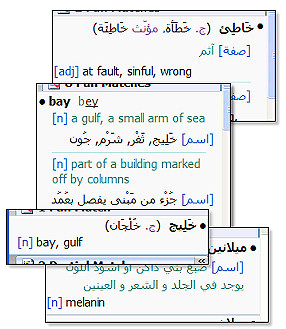
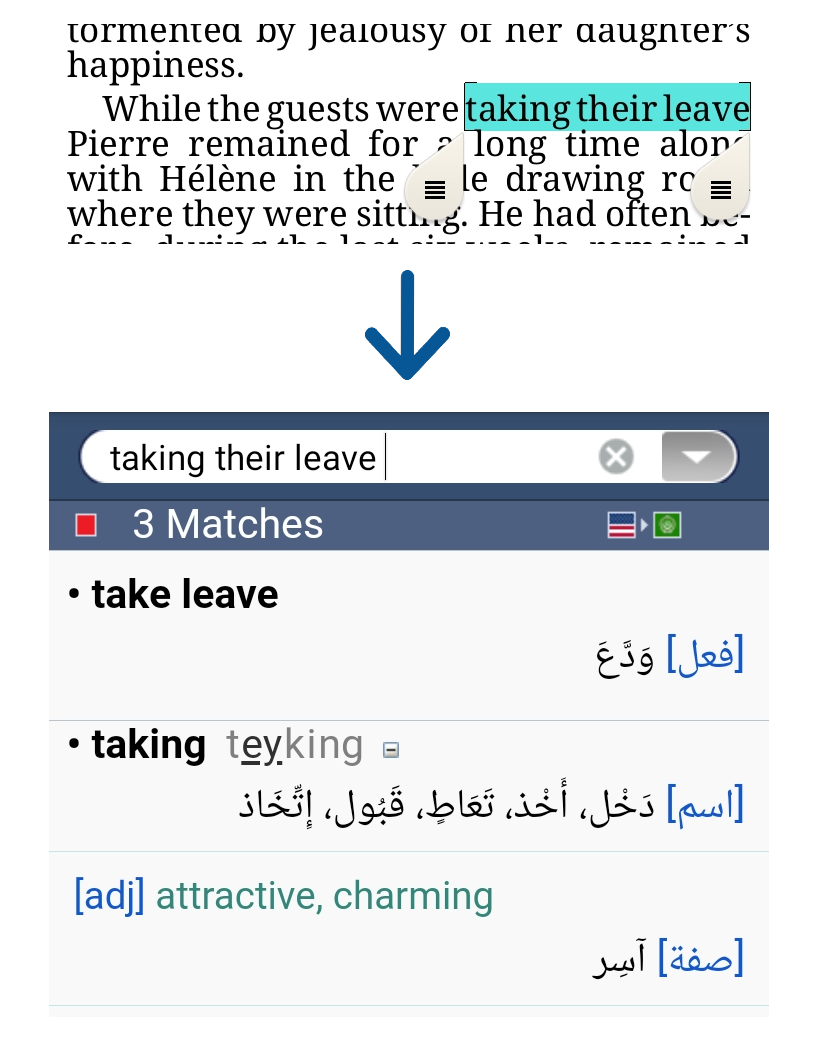
To use VerbAce-Pro just click on the word you want to translate, and the VerbAce-Pro results window will pop up with the trasnslation you need.
VerbAce-Pro captures and translates words and phrases from most Windows applications.
You can also pass the mouse over words and obtain quick translation via the Micro Window, or search for words by typing them in the term box.
Dictionary Features
|
Arabic broken plural and feminine forms | |
|
English usage indications | |
|
English broken plural forms | |
|
Entries sub-meanings (when applicable) | |
|
Many technical fields covered (Medicine, Anatomy, Law, Computing, Finance, and more) |
Advanced Morphological Engine
VerbAce-Pro morphological engine can analyze complex word formations and display the relevant dictionary entries.
The engine also detects and shows the form number of Arabic verbs.
License and Delivery
You can use VerbAce-Pro under the following license types:
|
Free Trial: Use the full version of VerbAce-Pro freely for a trial period | |
|
Lifetime License: Enjoy VerbAce-Pro without time limit |
The license is delivered immediately after payment confirmation via email.
System Requirements
|
VerbAce-Pro is compatible with Windows Vista/7/8/10 | |
|
VerbAce-Pro is NOT compatible with older Windows versions or Mac OS |
Made with Mobirise web themes