Sardinia is a treasure trove of history, culture, and natural wonders. With its stunning landscapes, vibrant culture, and rich history, Sardinia is a destination that has something for everyone. Whether you’re interested in history, culture, nature, or simply relaxing on a beautiful beach, Sardinia is a must-visit destination that will leave you with unforgettable memories.
Sardinia’s cultural heritage is a unique blend of traditional and modern elements. The island is home to numerous festivals and events throughout the year, showcasing its rich folklore and traditions. The Sardinian people are known for their warm hospitality, and visitors can experience this firsthand by attending a traditional Sardinian dinner, known as a “festa.” sardinia
One of the most iconic aspects of Sardinian culture is its music and dance. The island is famous for its traditional folk music, which features instruments such as the accordion and the launeddas, a type of panpipe. The Sardinian dance, known as the “ballu tundu,” is a traditional circle dance that is performed during festivals and celebrations. Sardinia is a treasure trove of history, culture,
Sardinia has a long and complex history that dates back to the Neolithic era. The island has been inhabited by various civilizations, including the Phoenicians, Carthaginians, Romans, and Pisans, each leaving their mark on the island’s culture, architecture, and traditions. In the 11th century, Sardinia was divided into four giudicati, or kingdoms, which were later conquered by the Aragonese in the 14th century. In 1861, Sardinia became part of the Kingdom of Italy. Sardinia’s cultural heritage is a unique blend of
Sardinia: A Treasure Trove of History, Culture, and Natural WondersLocated in the heart of the Mediterranean, Sardinia is a stunning Italian island that boasts a rich history, vibrant culture, and breathtaking natural landscapes. With its crystal-clear waters, pristine beaches, and rugged mountains, Sardinia is a paradise for travelers seeking an unforgettable experience.
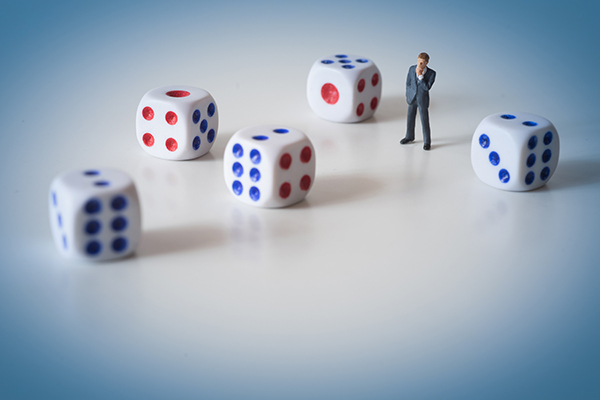
Probability calculations that can be used to inform decisions and manage risk can be very complicated. This unit is designed to help build your foundational understanding of probability and introduce you to some of the techniques that are used to calculate very difficult probabilities. You will continue to work with the Games Fair interactive tool and be exposed to real world situations to start to realize the impact of probability in your world.
The focus of this unit is on Probability Distributions. You will learn how to display all of the outcomes of a probability situation in a table and a bar graph. You will learn some formulas that will work with some situations. A large part of the unit will be calculating the expected value, or average, of a probability situation. The Games Fair Interactive tool will be used throughout the unit and will provide a focus for the summative and lead up to the Culminating Assignment, the Games Fair.
Probability calculations that can be used to inform decisions and manage risk can be very complicated. This unit is designed to help build your foundational understanding of probability and introduce you to some of the techniques that are used to calculate very difficult probabilities. You will continue to work with the Games Fair interactive tool and be exposed to real world situations to start to realize the impact of probability in your world.
After much work to collect valid and reliable information in the form of statistics, you will learn to analyse the statistics to make conclusions that can help make decisions. You will explore one real and two variables statistics using the World Map Interactive tool. A data set used will include a perceived quality of Health Care across Canada. The unit summative will be require you to act as a consultant for a large Canadian franchise to help them make a decision.

In Unit 3 of this course, you demonstrated how to represent the distribution of a discrete random variable. This unit will look at the distribution of continuous random variables and how they are compared to discrete variables. In the third and fourth activity, you will be introduced to what may be the most important mathematical function: the normal distribution.
In this unit, you will consolidate the concepts and skills you have learned throughout this course. You will complete the course culminating activity, through which you will analyze the impacts of energy transformation technologies on society and the environment.