Enable healthcare providers to see, at a glance, the sentiment trend of patient feedback as it is submitted and to act on emerging issues within minutes rather than waiting for nightly batch reports. The feature introduces a streaming analytics pipeline, a dynamic dashboard, and an alerting engine powered by a hybrid rule‑based + transformer‑based sentiment model.
Feature Specification & Design Document Version 1.0 – April 2026 1. Executive Summary Feature name: Advanced Real‑Time Sentiment Analytics (ARSA) Feature ID: PFES‑011 Product: Patient Feedback Evaluation System (PFES) – a web‑based platform that collects, stores, and analyses patient‑generated feedback from multiple channels (in‑clinic kiosks, web portals, mobile apps, email, SMS, and social‑media integrations). PFES-011
| KPI | Current (baseline) | Target (6 months) | Impact | |-----|--------------------|-------------------|--------| | Time‑to‑awareness of negative spikes | 8 h (batch) | ≤ 5 min (real‑time) | Faster mitigation, reduced adverse events | | Percentage of complaints escalated within SLA | 62 % | 90 % | Higher compliance, better reputation | | Staff satisfaction with feedback loop | 3.2/5 | 4.5/5 | Improved morale, reduced “feedback fatigue” | | Net Promoter Score (NPS) lift | –2 | +5 | Direct revenue impact | | In‑Scope | Out‑of‑Scope | |----------|--------------| | • Real‑time ingestion of feedback from all existing PFES channels. • Streaming sentiment scoring (English + 5 additional languages). • Live dashboard with trend graphs, heat‑maps and drill‑down tables. • Configurable alert rules (threshold, time‑window, channel, location). • Integration with existing incident‑management system (e.g., ServiceNow). • Auditing & logging for GDPR/PHI compliance. | • Building a new feedback collection UI (existing PFES UI remains unchanged). • Deep‑learning model training pipeline (use pre‑trained model + fine‑tune offline). • Voice‑to‑text transcription (will be covered in PFES‑012). • Predictive “next‑issue” forecasting (future roadmap). | 3. Stakeholders | Role | Responsibility | |------|-----------------| | Product Owner (PO) | Prioritises PFES‑011 backlog, defines acceptance criteria. | | Clinical Operations Manager | Sets alert thresholds, validates sentiment relevance. | | Compliance Officer | Ensures PHI handling, audit trails, data‑retention policies. | | Data Science Team | Provides sentiment models, monitors drift, updates thresholds. | | Platform Engineering | Implements streaming pipeline, scaling, monitoring. | | UX/UI Designer | Designs dashboard, config UI, ensures accessibility. | | QA/Test Lead | Crafts functional, performance, security test suites. | | Support Desk | Receives alerts, escalates incidents, logs actions. | 4. Personas & User Stories 4.1 Personas | Persona | Goals | Pain Points | |---------|-------|-------------| | Dr. Maya Patel – Outpatient Clinic Director | Quickly spot declining satisfaction in her clinic, assign follow‑up tasks before a problem escalates. | Currently learns about a spike only after daily batch reports; must chase multiple data sources. | | Jordan Lee – Patient Experience Analyst | Drill down into sentiment by location, service line, and time‑of‑day to produce actionable insights. | Sentiment analysis is static; no ability to filter in real time. | | Samira Khan – Support Coordinator | Receive instant alerts on critical negative feedback, acknowledge and route to the right owner. | Misses urgent complaints that arrive after business hours; manual triage is slow. | | Evelyn O’Connor – Compliance Auditor | Verify that all patient‑feedback data is processed in a GDPR‑compliant manner, with immutable logs. | Lack of transparent processing logs for real‑time pipeline. | 4.2 User Stories | # | As a… | I want … | So that … | |---|-------|----------|-----------| | PFES‑011‑US‑001 | Clinical Operations Manager | to configure a “Critical Negative Sentiment” rule that triggers when > 70 % of feedback in a 10‑minute window scores ≤ ‑0.6 | I can be warned immediately when patients are collectively dissatisfied. | | PFES‑011‑US‑002 | Patient Experience Analyst | a live sentiment heat‑map by clinic floor & service line | I can visualise where problems are emerging without exporting data. | | PFES‑011‑US‑003 | Support Coordinator | to receive a Slack/Email push notification with the raw feedback text and a link to the incident ticket | I can acknowledge the issue within the SLA and assign it to the right team. | | PFES‑011‑US‑004 | Compliance Officer | an immutable audit log that records every sentiment scoring event (timestamp, model version, raw text hash) | I can demonstrate compliance during audits. | | PFES‑011‑US‑005 | Data Scientist | a model‑performance dashboard that flags concept drift (e.g., drop in F1‑score) | I can schedule model retraining before accuracy degrades. | | PFES‑011‑US‑006 | UI Designer | a responsive dashboard that follows WCAG 2.2 AA, with keyboard‑only navigation and screen‑reader labels | All staff, including those with disabilities, can use the tool. | | PFES‑011‑US‑007 | Platform Engineer | to autoscale the streaming workers based on Kafka lag and CPU utilisation | The system stays performant during surge events (e.g., post‑vaccination drive). | | PFES‑011‑US‑008 | Product Owner | to toggle the feature on/off per region for a phased rollout | We can test in a pilot site before global enablement. | 5. Functional Requirements | FR ID | Description | Priority | |-------|-------------|----------| | FR‑1 | Real‑time ingestion : All feedback events from existing sources (Kiosk, Web, Mobile, Email, SMS, Social) must be published to a Kafka topic within ≤ 2 seconds of receipt. | Must | | FR‑2 | Streaming sentiment scoring : Each event must be enriched with a sentiment score (range –1.0 to +1.0) using the hybrid model (rule‑based + transformer). Latency per event ≤ 150 ms. | Must | | FR‑3 | Language detection & routing : Auto‑detect language (English, Spanish, Mandarin, Arabic, French, German) and apply the appropriate language‑specific model. | Should | | FR‑4 | Dashboard UI : Provide a single‑page web dashboard with: • Global sentiment line chart (rolling 24 h). • Heat‑map by clinic location & service line. • Table of “Top 10” most negative feedback items (with raw text). • Configurable time window selector (5 min, 15 min, 1 h, 24 h). | Must | | FR‑5 | Alert engine : Allow users to define threshold‑based alerts (percentage negative, absolute count, rate of change). Alerts must be sent via: • Email • Slack webhook • ServiceNow incident creation. | Must | | FR‑6 | Config UI : A “Rules & Settings” page where users can: • Add/edit/delete alerts. • Choose model version per language. • Set retention period for raw feedback (default 30 days). | Should | | FR‑7 | Audit logging : Every scoring event must be recorded in an append‑only immutable log (e.g., AWS QLDB or Azure Confidential Ledger) with fields: event‑id, timestamp, model‑version, language, sentiment‑score, raw‑text hash, user‑id (if applicable). | Must | | FR‑8 | Data retention & purge : Raw feedback text must be automatically deleted after the configured retention period, while aggregated sentiment statistics remain. | Must | | FR‑9 | Model versioning : The system must expose an API endpoint to query the active model version for each language and support hot‑swap without downtime. | Should | | FR‑10 | Metrics exposure : Export Prometheus metrics for: • Ingestion lag (Kafka offset lag). • Scoring latency (p95). • Alert firing count. | Must | | FR‑11 | Fail‑over handling : If the sentiment service is unavailable, events must be persisted to a dead‑letter queue and re‑processed once the service recovers. | Must | | FR‑12 | Accessibility : All UI components must meet WCAG 2.2 AA standards (color contrast, keyboard navigation, ARIA labels). | Must | | FR‑13 | Internationalisation : UI strings must be externalised; initial localisation for English, Spanish, French. | Should | | FR‑14 | Performance : Dashboard page load ≤ 3 seconds on a 3G connection, ≤ 1 second on broadband. | Should | | FR‑15 | Security : All traffic must be TLS 1.3, JWT‑based authentication with role‑based access control (RBAC). PHI must never be logged in plaintext. | Must | 6. Non‑Functional Requirements | NFR ID | Category | Requirement | |--------|----------|--------------| | NFR‑1 | Scalability | System must handle ≥ 10 k feedback events per minute with linear scaling; support burst up to 50 k/min . | | NFR‑2 | Reliability | 99.9 % uptime for the streaming pipeline; Mean Time To Recovery (MTTR) ≤ 5 min. | | NFR‑3 | Security & Privacy | Data at rest encrypted (AES‑256). No raw PHI stored longer than retention window. All audit logs tamper‑evident. | | NFR‑4 | Observability | Centralised logging (ELK/Opensearch), distributed tracing (OpenTelemetry), metrics (Prometheus + Grafana). | | NFR‑5 | Maintainability | Codebase adheres to Clean Architecture; unit test coverage ≥ 85 % for core components. | | NFR‑6 | Compliance | GDPR, HIPAA, and local health‑information regulations. Must support Data Subject Access Requests (DSAR) for sentiment‑derived data. | | NFR‑7 | Portability | Deployable on both AWS (EKS) and Azure (AKS) using Helm charts; all cloud‑specific resources abstracted via Terraform. | | NFR‑8 | Disaster Recovery | Daily snapshots of QLDB ledger stored in a different region; RTO ≤ 30 min. | | NFR‑9 | Usability | New users should be able to create an alert in < 5 minutes after a brief onboarding tutorial. | | NFR‑10 | Internationalisation | Support Unicode UTF‑8 throughout pipeline; no hard‑coded locale strings. | 7. Architecture Overview +------------------+ +---------------------+ +-------------------+ | Feedback | (1) | Ingestion Service | (2) | Kafka Cluster | | Sources | ----> | (REST / Webhooks) | ----> | (topic: pfes.raw)| +------------------+ +---------------------+ +-------------------+ | | (3) Stream Processing v +-----------------------------+ | Flink / Spark Structured | | Streaming (sentiment job) | +-----------------------------+ | +--------------------------+---------------------------+ | | | (4a) | (4b) | (4c) | +----------------+ +------------------------+ +-------------------+ | Sentiment | | Enrichment & | | Dead‑Letter Queue | | Service (ML) | | Language Detection | | (Kafka retry) | +----------------+ +------------------------+ +-------------------+ | | v v +----------------+ +-------------------+ | Scored Events | | Metrics & Logs | | (topic: pfes.scored) | (Prometheus, ELK)| +----------------+ +------------------- Enable healthcare providers to see, at a glance,
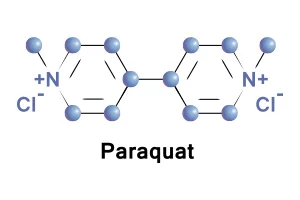
Paraquat is a dangerous, extremely toxic chemical that is used as an herbicide. Because of its toxicity, paraquat is available only to certified pesticide applicators in the U.S. and is banned in 32 countries around the world. Nevertheless, it is one of the most widely used herbicides in the U.S. because it is a very effective way to control weeds and grasses, especially those that are resistant to Roundup. In The United States, paraquat is blue in color, emits a strong odor, and has an added agent that will induce vomiting upon consumption. It is manufactured by 377 companies worldwide, including the agro-giant Syngenta. According to the US EPA, “Paraquat is highly toxic. One small sip can be fatal and there is no antidote.”
Gramoxone, Parazone, Par-Shot 3.0, Quick-Quat, Blanco, Cyclone SL 2.0, Firestorm Helmquat 3SL, Bonedry, Devour, Crisquat, Dexuron, Esgram, Gramuron, Ortho, Paraquat CL, Para-col, Pillarxone, Tota-col, Toxer Total, PP148, Gramixel, AH 501, Bai Cao Ku
Exposure to paraquat can happen through ingestion, inhalation, or skin contact. The people who are most commonly exposed to paraquat are certified pesticide applicators who are licensed to use it and those who live near fields where paraquat is sprayed.
Paraquat is used on commercial farms to control invasive weeds. Applicators spray it on crops such as corn, soybeans, wheat, and alfalfa. It is also used on orchards and to desiccate (dry) crops like cotton before harvesting.

Paraquat is a poison; even a small amount can be fatal. Ingestion of paraquat may also result in the person developing the following health issues:
Long-term exposure to paraquat may also cause severe health issues. Those who are exposed to paraquat are at a higher risk for the following health conditions:
The possible symptoms of paraquat exposure or poisoning are:
If you suspect that you have ingested paraquat, avoid further contact with the chemical and seek medical attention immediately. If you suspect that you have been exposed to paraquat through your skin, remove any clothes you are wearing, immediately wash your body, and seek medical attention as soon as possible.
If you suspect you have been suffering from chronic, low-level exposure to paraquat, urine and blood tests may be available to you. However, they must be performed quickly since paraquat only stays in the body for 12 to 24 hours following exposure.

The best way to reduce your risk of exposure is to stop using paraquat and switch to another product. There are many, safer, alternatives to paraquat that will yield the same results. In 32 countries, including China and the European Union, commercial farmers are using other products because paraquat is banned.
If you are concerned about your health, contact your doctor or find a doctor who is familiar with the health effects of paraquat to determine the best options for your health moving forward.
Paraquat may also be labeled as: Paraquat Dichloride, Methyl Viologen, 1,1'-dimethyl-4,4'-bipyridinium