



download spi.h download spi.hYoutube download spi.h X(Twitter) 📧️Email
Download Spi.h May 2026

IP POWER / IP Smart PDU

download spi.h

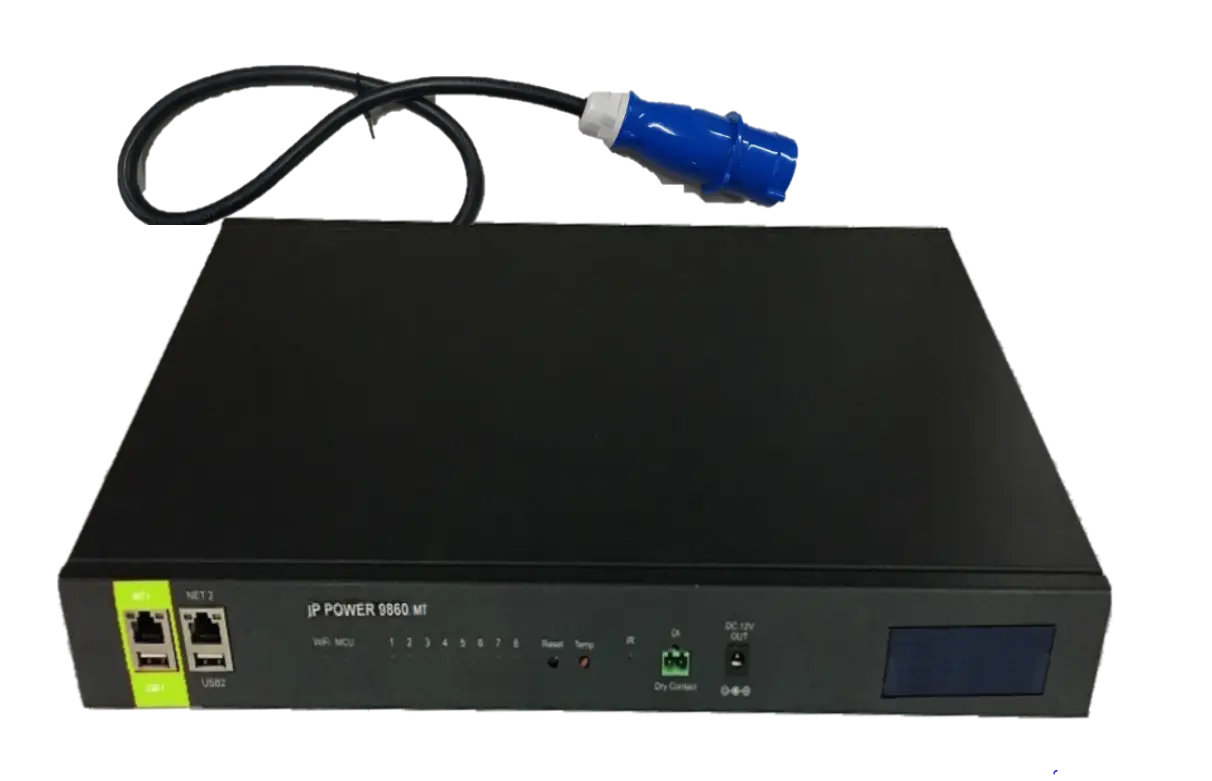
9860MT

  • 8x C13/NEMA5 outlet,10A
  • 100~240VAC wiring,max32A
  • 1U-rack size,LCD display
  • 8x Ammeter Voltmeter
  • 2x Ethernet RJ45
  • 1xDI,1xUSB
  • 12VDC power Jack out
  • 1x5VDC out for USB type
  • TV10 surge suppressor
  • Timer inside

  • https/http webserver,CGI
  • ipv4/ipv6/mDNS
  • MQTT,Telnet,Modbus/tcp
  • SNMPv1v2v3,VPN Client

  • Opt Model wireless
  • Opt Model EAPOL(IEEE802.1x)
download spi.h

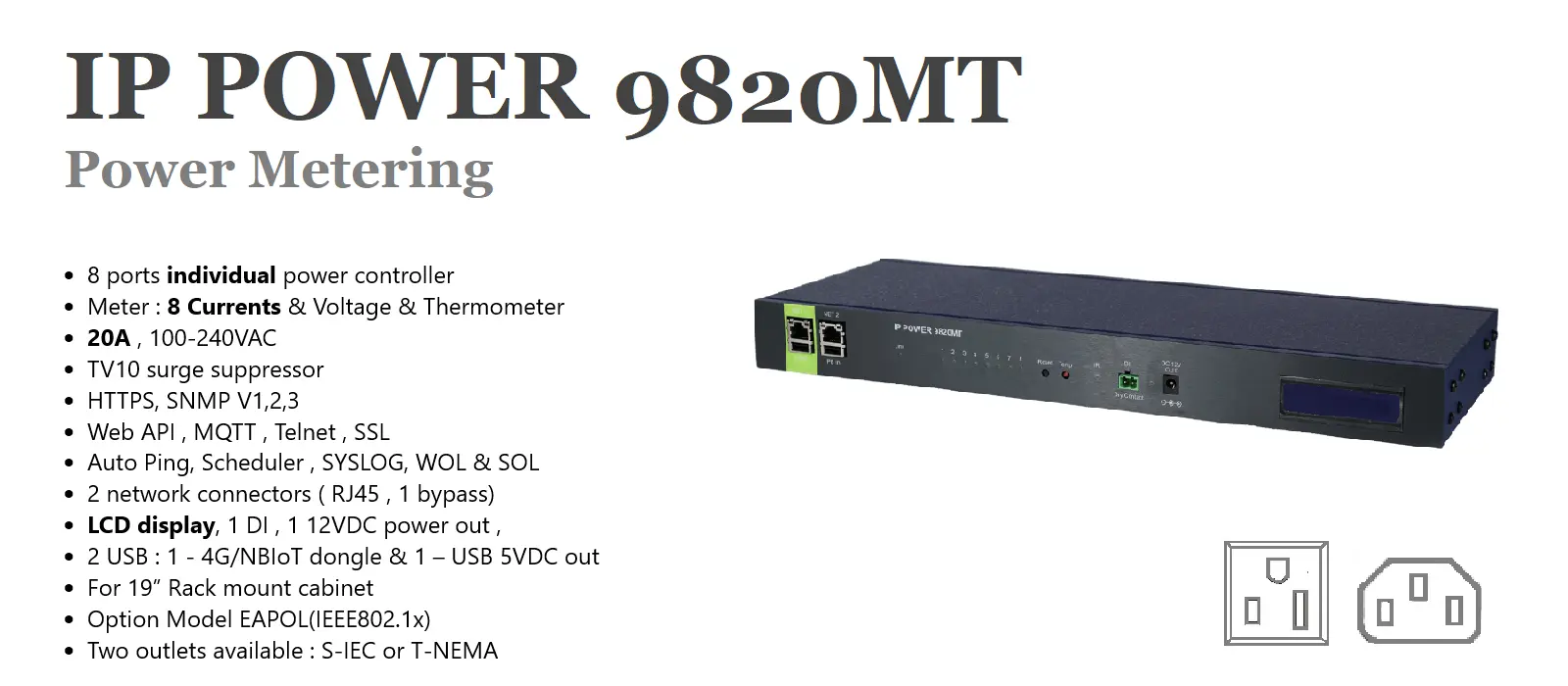
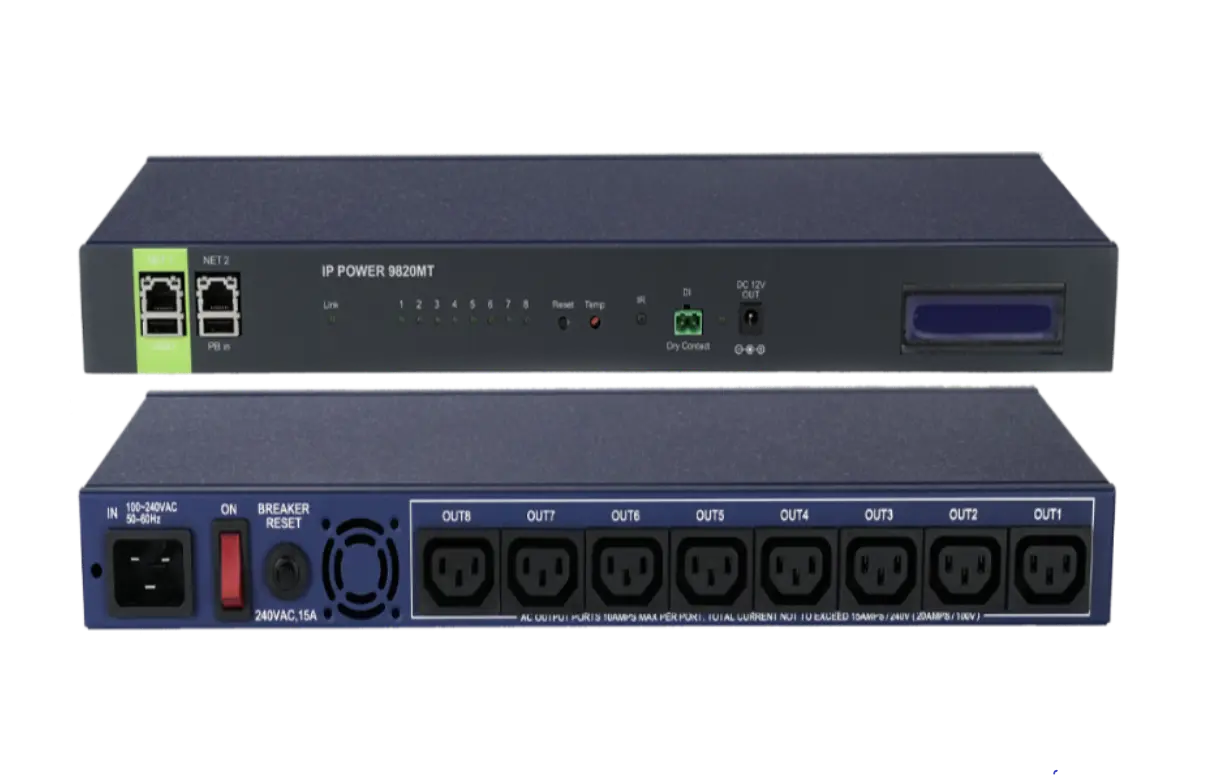
9820MT

  • 8x C13/NEMA5 outlet,10A
  • 100~240VAC C20in, max 20A
  • 1U-rack size,LCD display
  • 8xAmmeter,1 Voltmeter
  • 2x Ethernet RJ45
  • 1xDI,1xUSB
  • 12VDC power Jack out
  • 1x5VDC out for USB type
  • TV10 surge suppressor
  • Timer inside

  • https/http webserver,CGI
  • ipv4/ipv6/mDNS
  • MQTT,Telnet,Modbus/tcp
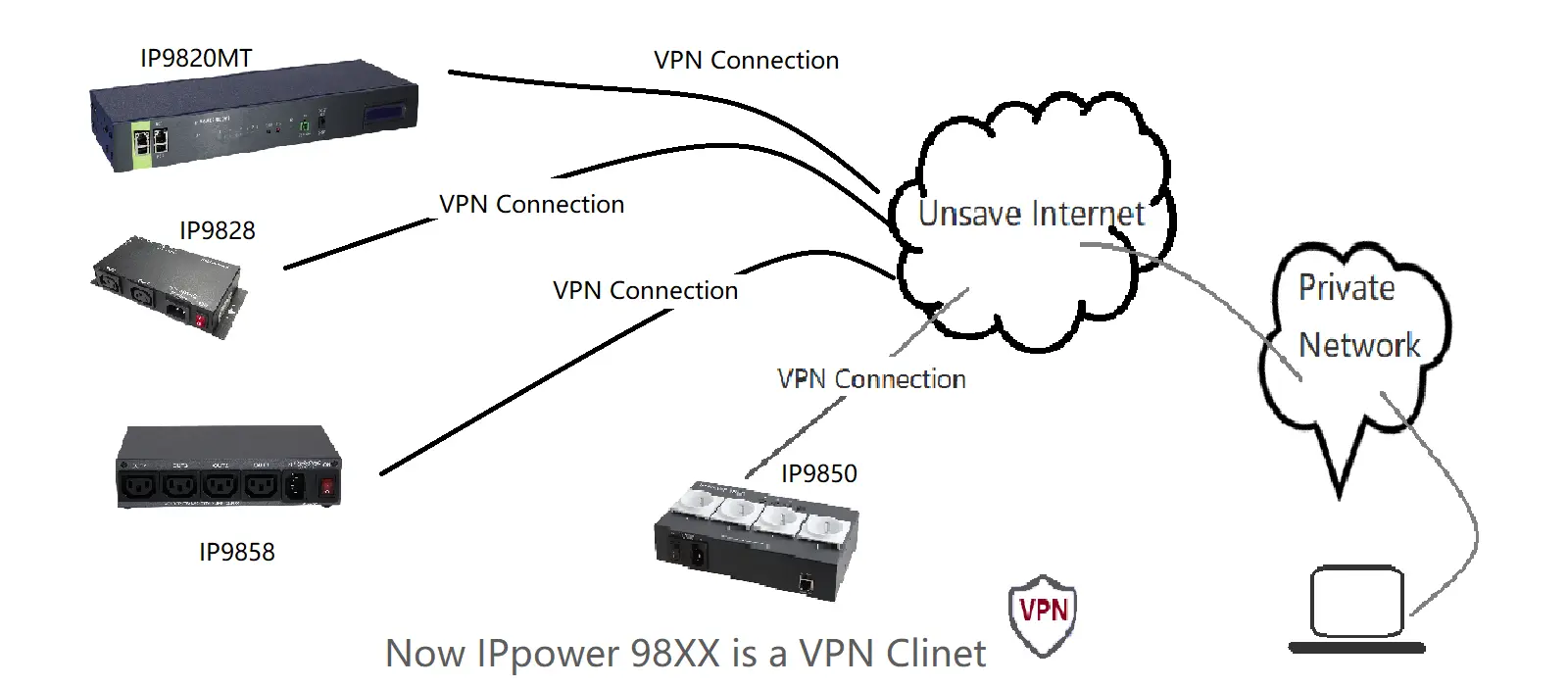
  • SNMPv1v2v3,VPN Client

  • Opt Model wireless
  • Opt Model EAPOL(IEEE802.1x)
download spi.h

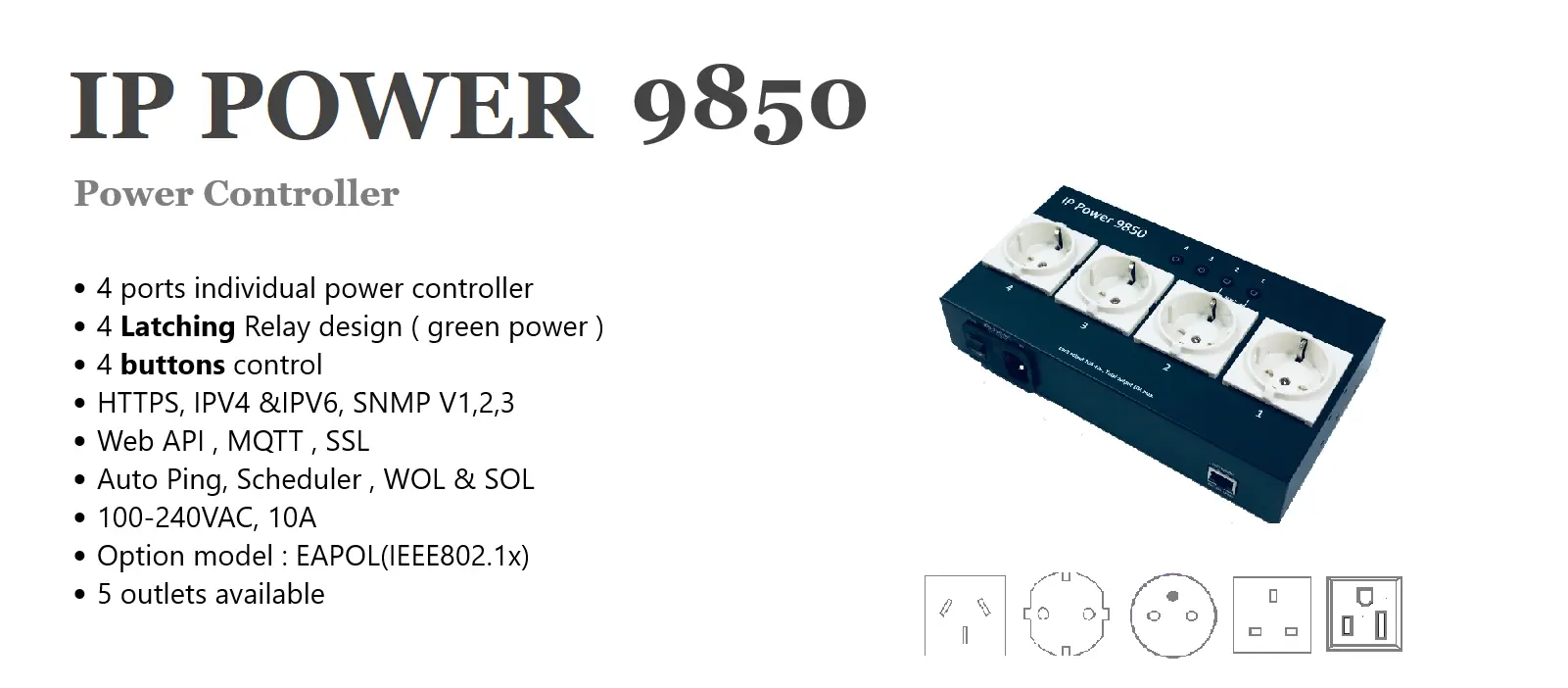
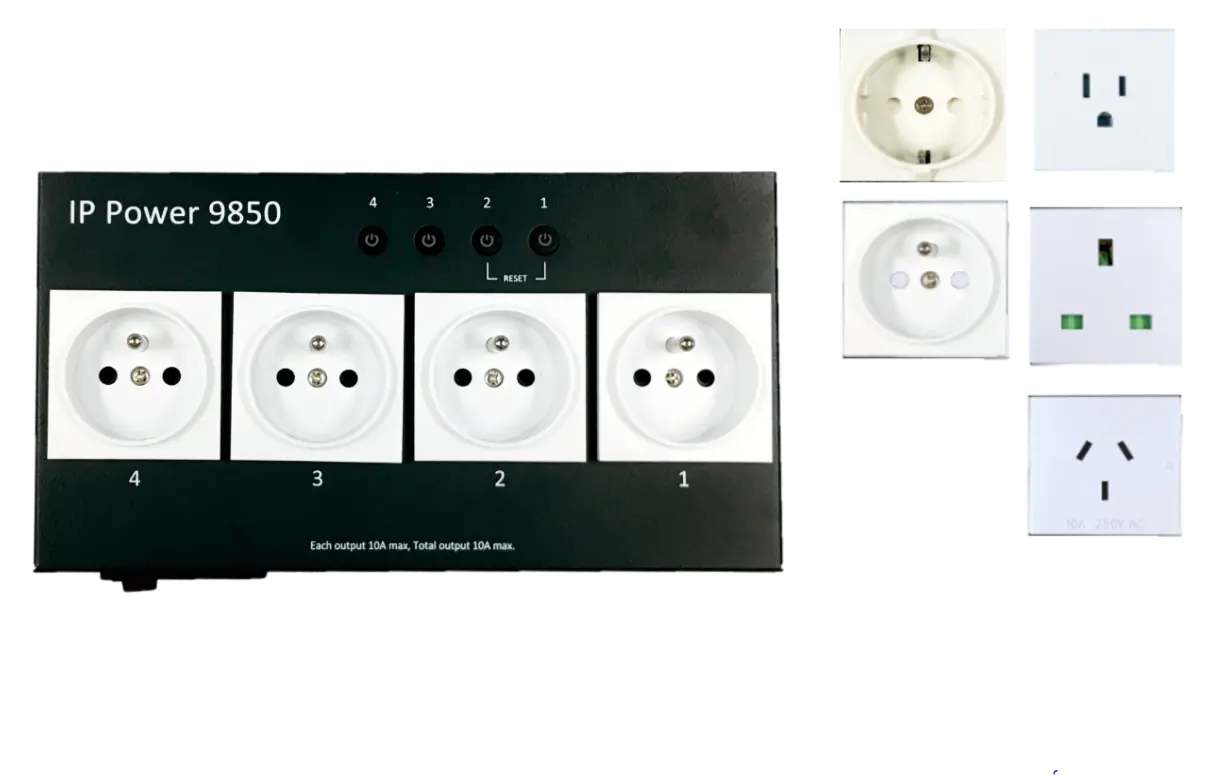
9850

  • 4x Country type outlet
  • AU,FR,GE,USA,UK.. 10A
  • 100~240VAC C14in, max 15A
  • (LxWxH) 200x140x50 mm
  • 4x power button
  • Latched Relay (Green)
  • Surge suppressor circuit
  • Ethernet port
  • Timer inside

  • https/http webserver,CGI
  • ipv4/ipv6/mDNS
  • MQTT,Telnet,Modbus/tcp
  • SNMPv1v2v3,VPN Client

  • Opt Model wireless
  • Opt Model EAPOL(IEEE802.1x)
download spi.h

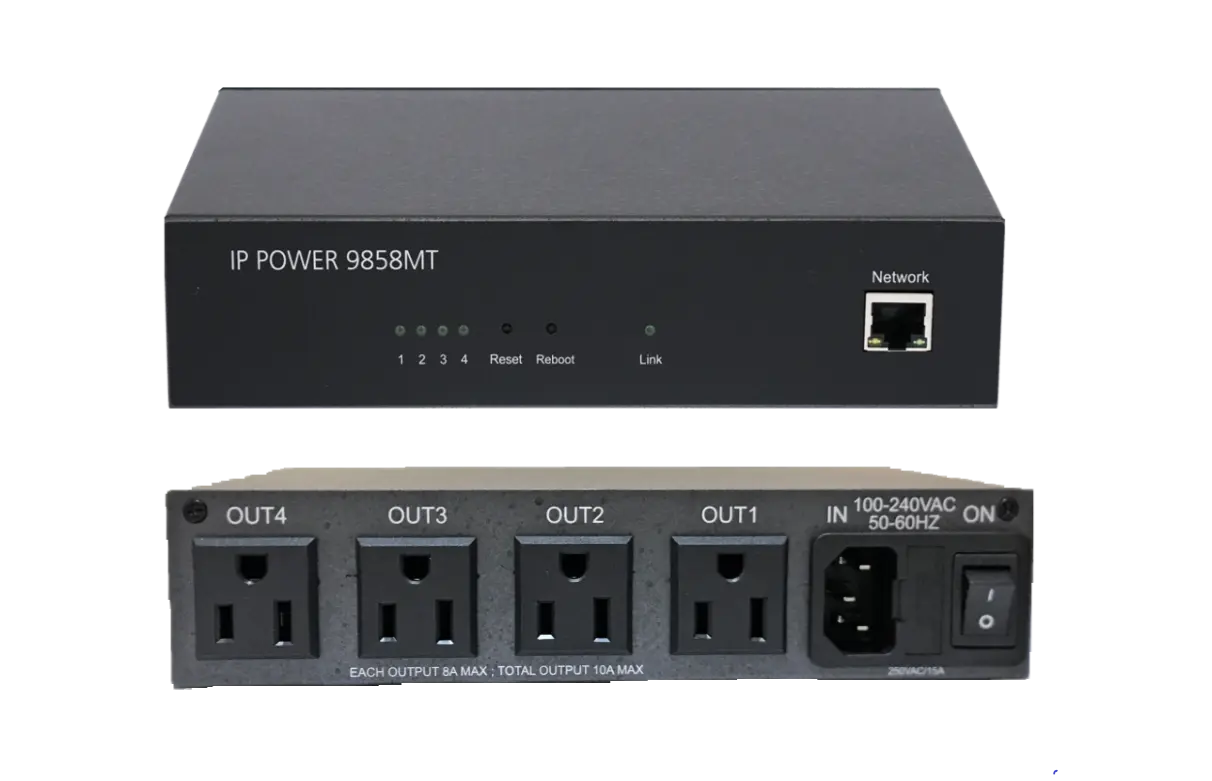
9858MT

  • 4x C13/NEMA5 outlet,10A
  • 100~240VAC C14 in,max 15A
  • (LxWxH)195x116x45mm
  • 1x Ethernet RJ45
  • Surge suppressor circuit

  • https/http webserver,CGI
  • ipv4/ipv6/mDNS
  • MQTT,Telnet,Modbus/tcp
  • SNMPv1v2v3,VPN Client

  • Opt Model wireless
  • Opt Model EAPOL(IEEE802.1x)
download spi.h

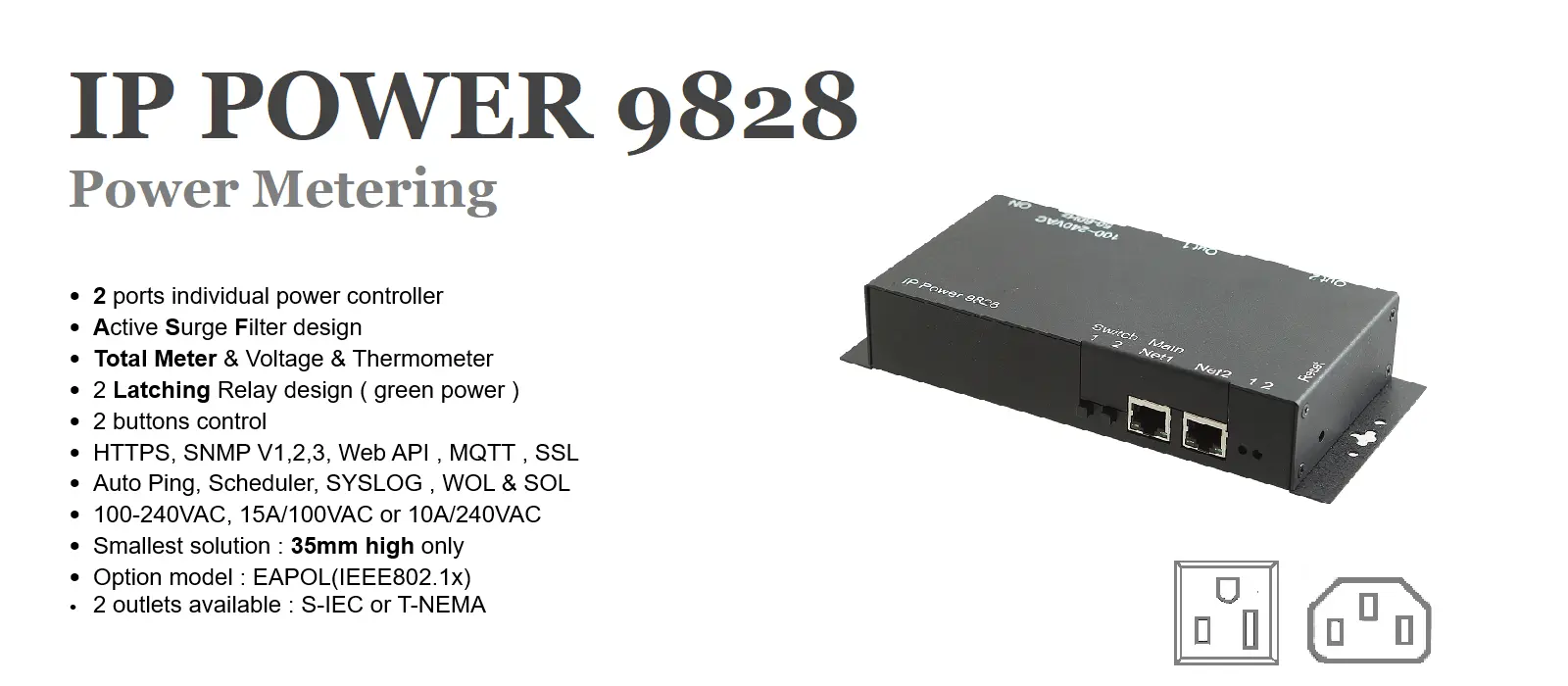
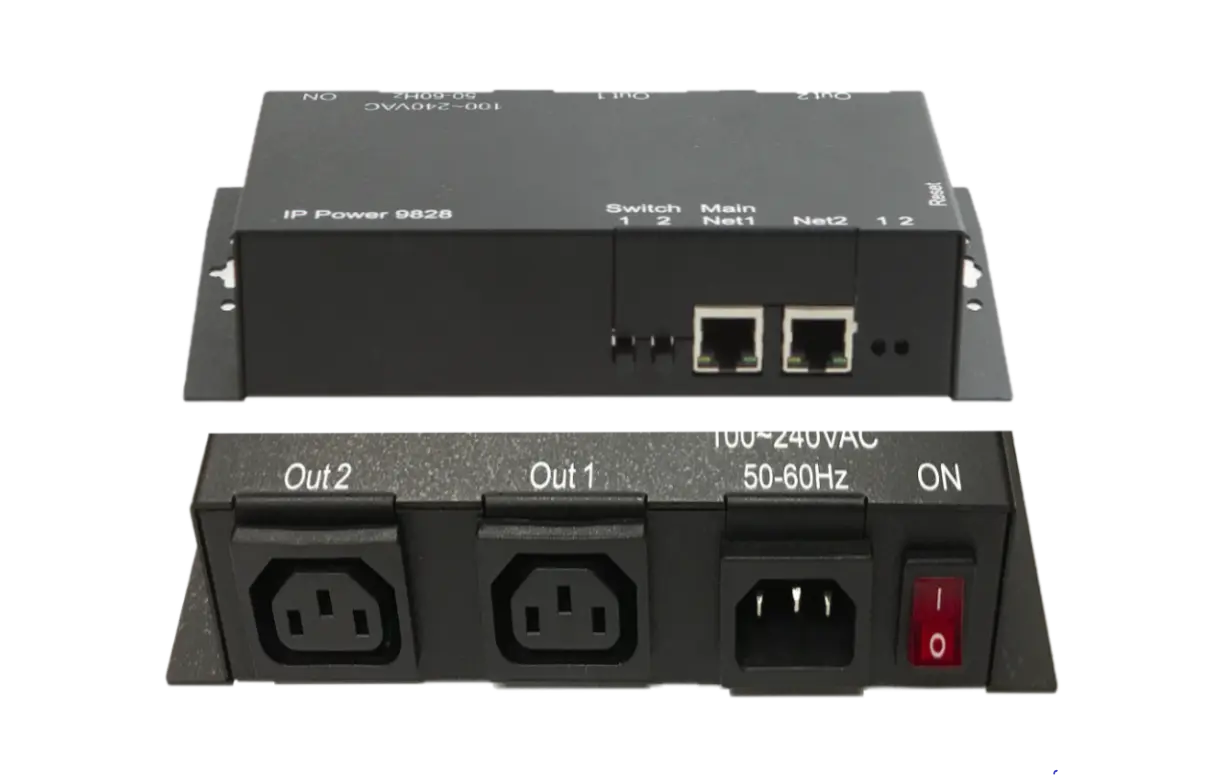
9828-P

  • 2x C13 outlet, 10A
  • 100~240VAC C14 in,max 15A
  • (LxWxH slim) 195x88x35mm
  • Latched Relay(Green)
  • 2x Ethernet RJ45
  • 2x programmable button
  • Active surge filter
  • Timer inside
  • 1xAmmeter

  • https/http webserver,CGI
  • ipv4/ipv6/mDNS
  • MQTT,Telnet,Modbus/tcp
  • SNMPv1v2v3,VPN Client

  • Opt Model wireless
  • Opt Model EAPOL(IEEE802.1x)
download spi.h

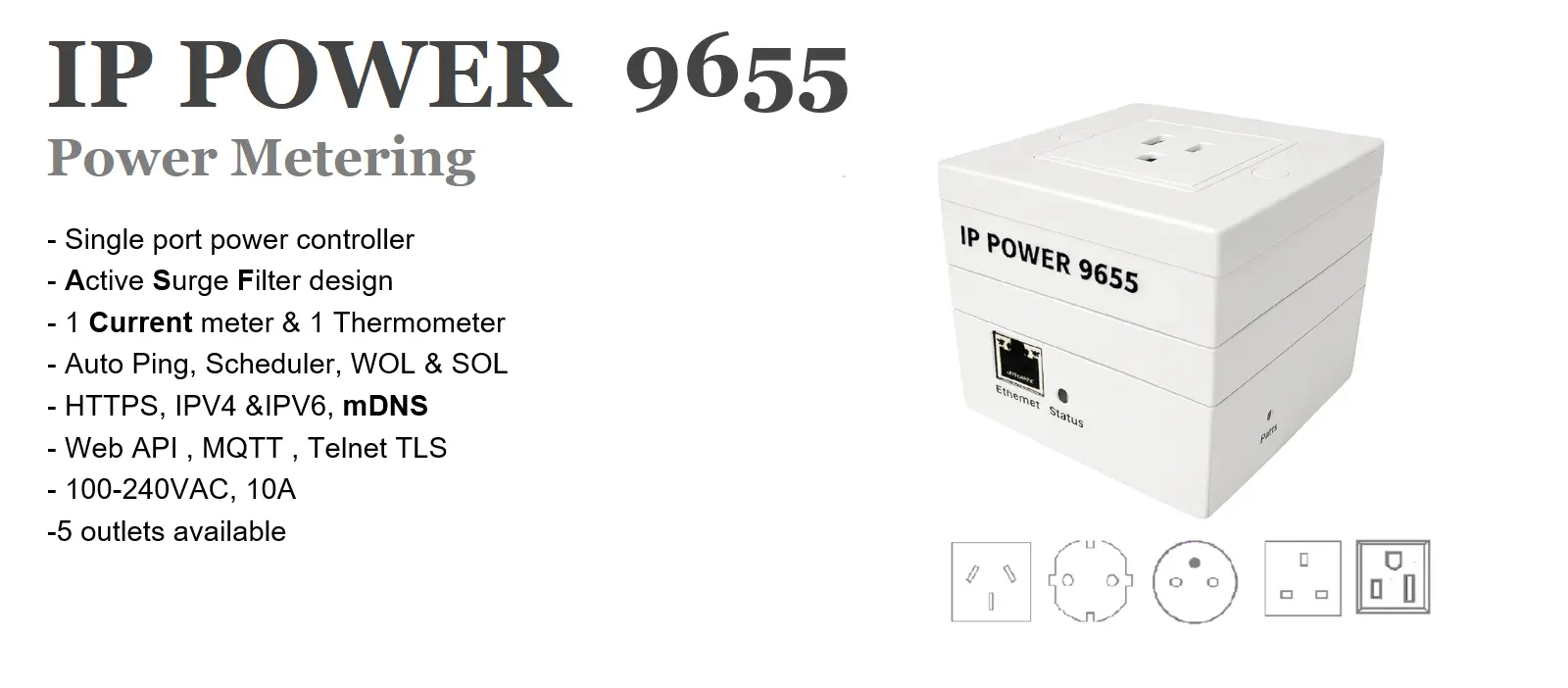
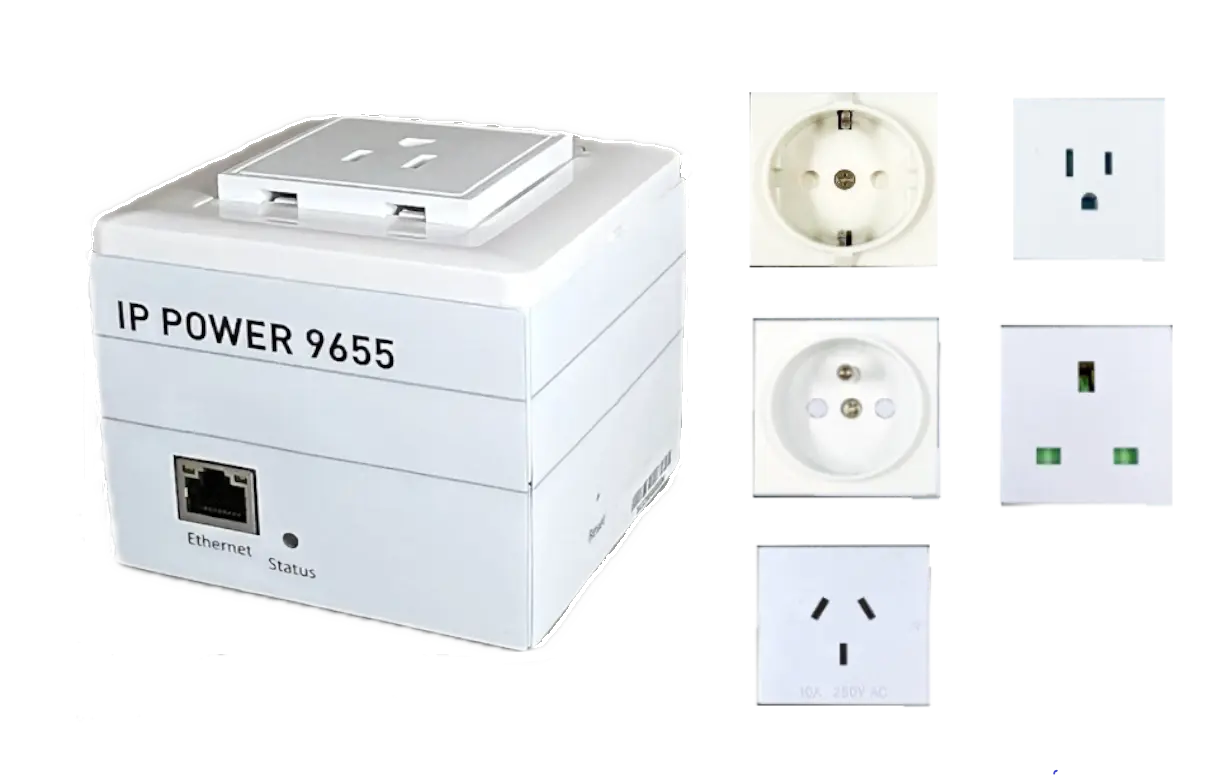
9655

  • 1 Country type outlet
  • AU,FR,GE,USA,UK..
  • 100~240VAC C14 in, 10A
  • 1xAmmeter
  • 1xThermometer
  • Active surge filter
  • (LxWxH) 86x86x80mm
  • 1xEthernet RJ45 & USB

  • https/http webserver,CGI
  • ipv4/ipv6/mDNS
  • MQTT,Telnet
  • SNMPv1&v2,Eventlog
  • quick power up
  • Opt Model wireless bridge
download spi.h

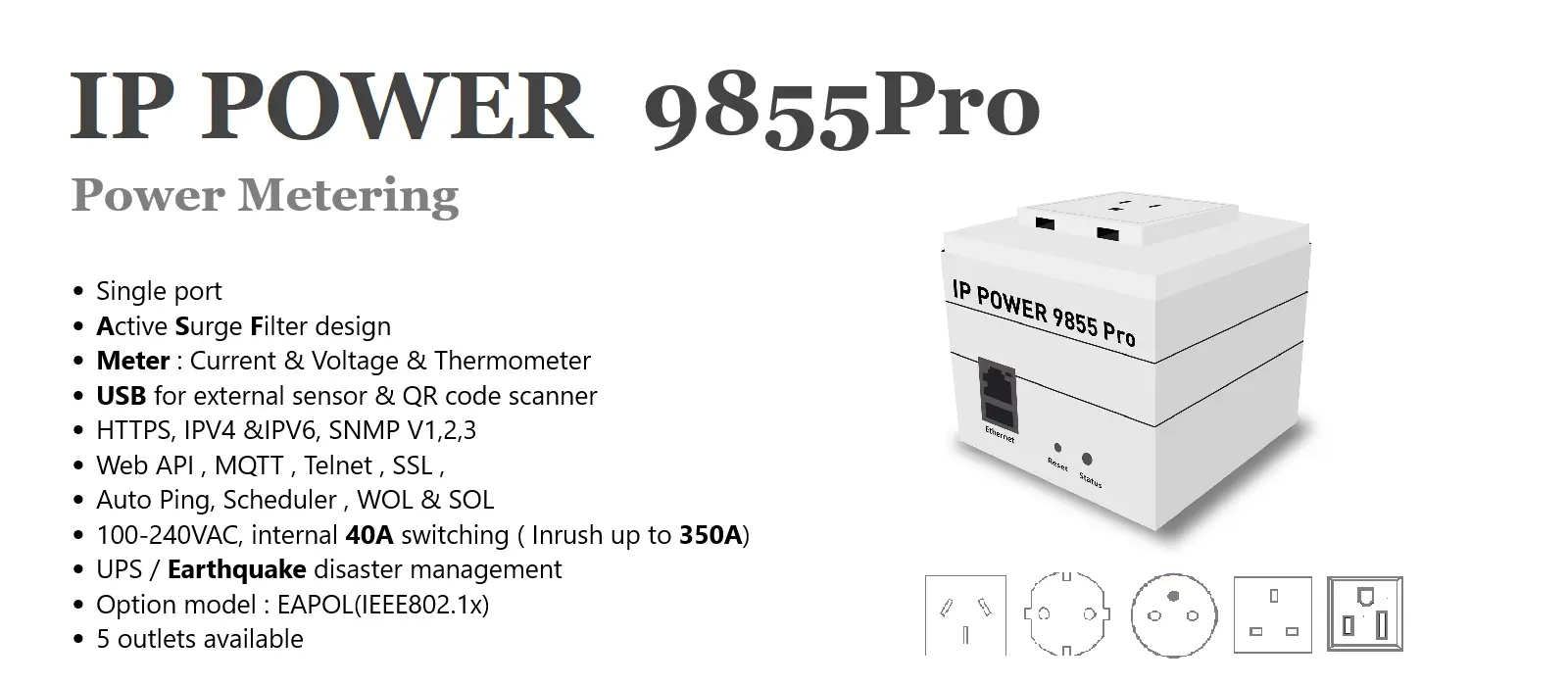
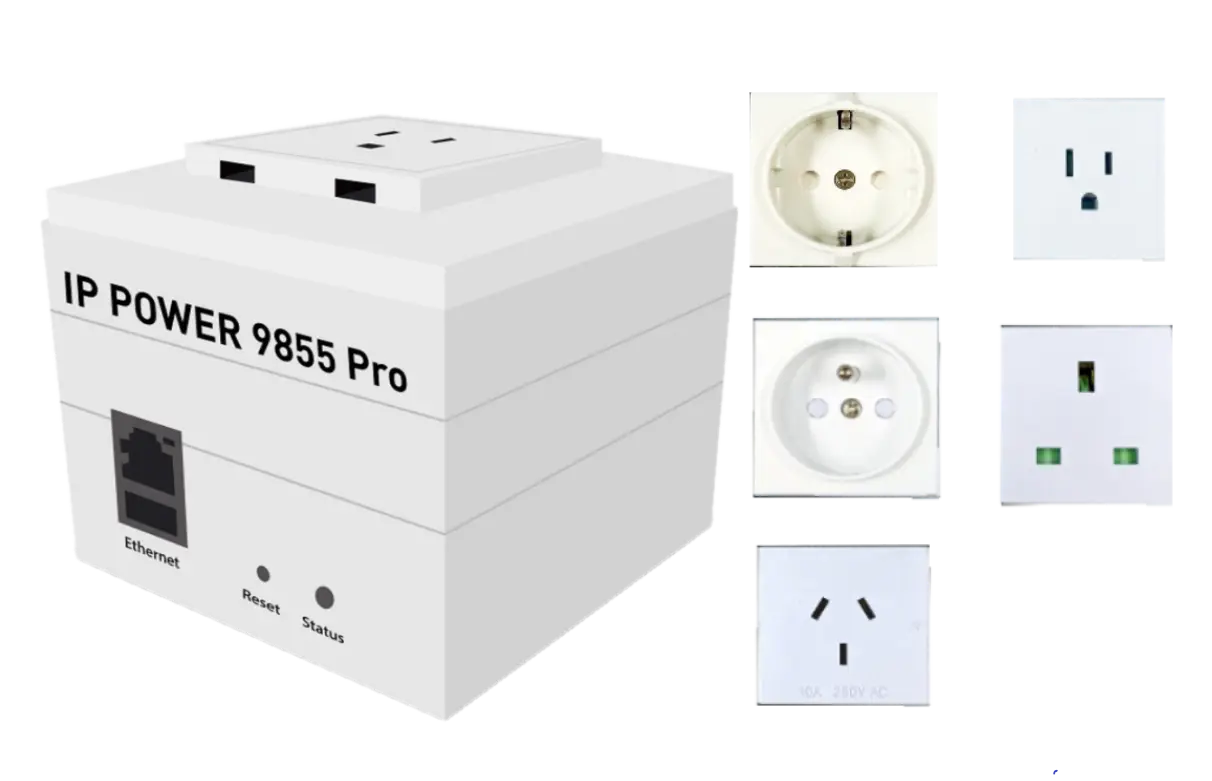
9855pro

  • 1 Country type outlet
  • AU,FR,GE,USA,UK..
  • 100~240VAC C14 in, 10A
  • internal 40A power switching
  • Prevent Start-Up 200A inrush
  • Prevent Motor voltage spikes
  • Active surge suppres
  • (LxWxH) 86x86x80mm
  • 1xEthernet RJ45 & USB
  • 1xVoltmter
  • 1xAmmeter
  • 1xThermometer

  • https/http webserver,CGI
  • ipv4/ipv6/mDNS
  • MQTT,Telnet,Modbus/tcp
  • SNMPv1v2v3,VPN Client
  • EAPOL(IEEE802.1x)
  • UPS management
  • Earthquake disaster manage.
  • Opt Model wireless bridge
  • Opt Model wireless
download spi.h

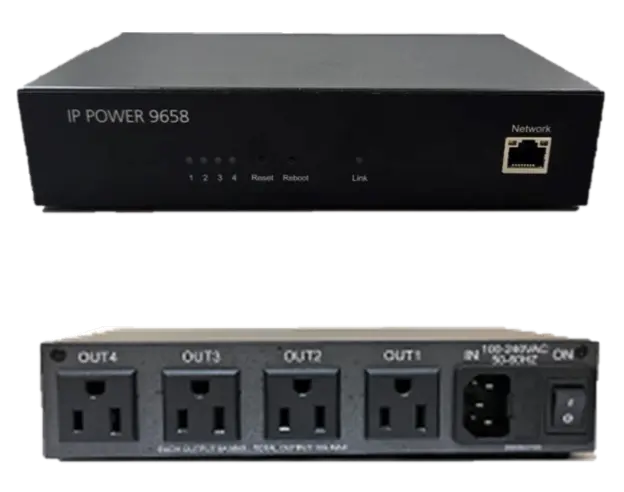
9658

  • 4x C13/NEMA5 outlet,10A
  • 100~240VAC C14 in,max 15A
  • (LxWxH)195x116x45mm
  • 1x Ethernet RJ45
  • 1xAmmeter
  • 1xThermometer
  • Active surge filter

  • https/http webserver,CGI
  • ipv4/ipv6/mDNS
  • MQTT,Telnet
  • SNMPv1
  • quick power up
  • Opt Model wireless
                                                         

Smart ATS PDU

download spi.h

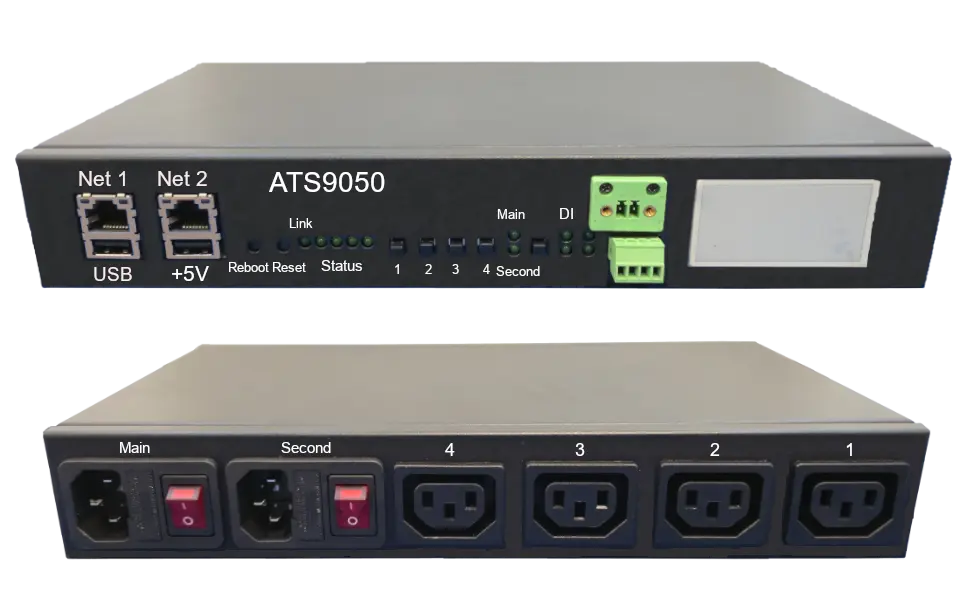
 ATS 9050 

  • -Automatic Transfer Switch(ATS)
  • -Dual Redundant Power input
  • Active surge filter
  • -Battery module support(maintains power)
  • 100~240VAC Input Max 15 A
  • 2x C14 inlet
  • 4x C13/NEMA5 outlet
  • E ink display monitor
  • 4x Ammeter
  • 2 Voltmeter
  • 1x Thermometer
  • 2x RJ45 Ethernet
  • 1x DI, 2x USB Port

  • HTTP HTTPS Web Server CGI
  • IPv4 IPv6 mDNS
  • CGI/CNT/MQTT
  • SNMPv1 v2 v3
  • EAPOL(IEEE802.1x)
  • SSL
  • Mail and Voice notification
  • Option Model wireless
download spi.h

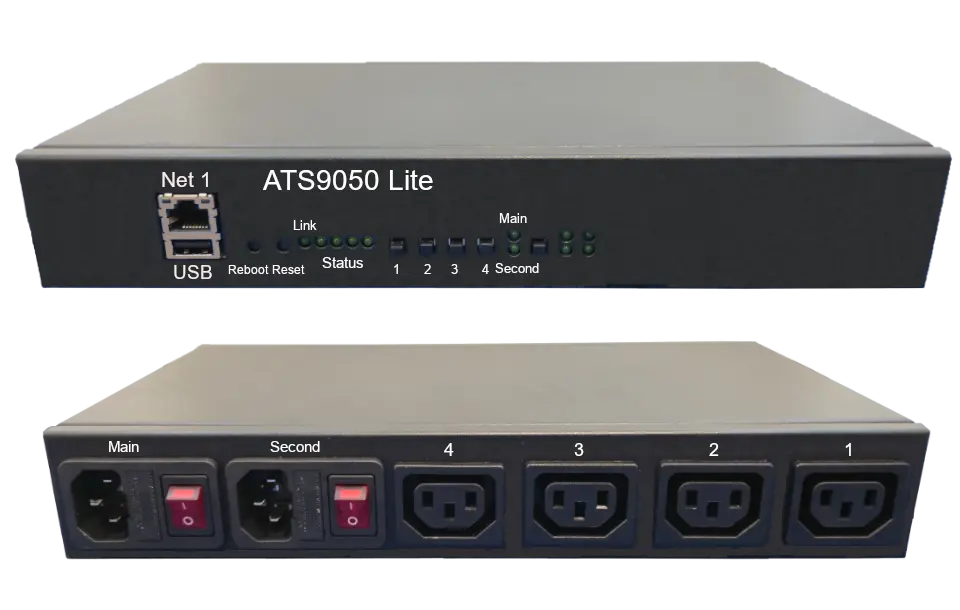
 ATS 9050 Lite 

  • -Automatic Transfer Switch(ATS)
  • -Dual Redundant Power input
  • Active surge filter
  • 100~240VAC Input Max 15 A
  • 2x C14 inlet
  • 4x C13/NEMA5 outlet
  • 1 total Ammeter
  • 2x Voltmeter
  • 1x Thermometer
  • 1x RJ45 Ethernet
  • 1x USB Port

  • HTTP HTTPS Web Server CGI
  • IPv4 IPv6 mDNS
  • CGI/CNT/MQTT
  • SNMPv1 v2 v3
  • EAPOL(IEEE802.1x)
  • SSL
  • Mail and Beeper notification
  • Option Model wireless
download spi.h

 ATS 9820 

  • -Automatic Transfer Switch(ATS)
  • -Dual Redundant Power input
  • Active surge filter
  • -Battery module support(maintains power)
  • 100~240VAC Input Max 15 A
  • 2x C14 inlet
  • 8x C13/NEMA5 outlet
    (1 set of 4-outlet ATS function)
  • 1U-rack size, E ink display monitor
  • 8x Ammeter
  • 2x Voltmeter
  • 1x Thermometer
  • 2x RJ45 Ethernet
  • 1x DI, 2x USB Port

  • HTTP HTTPS Web Server CGI
  • IPv4 IPv6 mDNS
  • CGI/CNT/MQTT
  • SNMPv1 v2 v3
  • EAPOL(IEEE802.1x)
  • SSL
  • Mail and Voice notification
  • Option Model wireless
download spi.h

 ATS 9820 Lite 

  • -Automatic Transfer Switch(ATS)
  • -Dual Redundant Power input
  • Active surge filter
  • 100~240VAC Input Max 15 A
  • 2x C14 inlet
  • 8x C13/NEMA5 outlet
    (1 set of 4-outlet ATS function)
  • 1U-rack size
  • 1 total Ammeter
  • 2x Voltmeter
  • 1x Thermometer
  • 1x RJ45 Ethernet
  • 1x USB Port

  • HTTP HTTPS Web Server CGI
  • IPv4 IPv6 mDNS
  • CGI/CNT/MQTT
  • SNMPv1 v2 v3
  • EAPOL(IEEE802.1x)
  • SSL
  • Mail and Beeper notification
  • Option Model wireless
                                                         

Download Spi.h May 2026

Downloading SPI.h: A Comprehensive Guide to Getting Started with SPI Libraries**

The Serial Peripheral Interface (SPI) is a widely used communication protocol in embedded systems, allowing devices to exchange data with each other. When working with SPI, developers often require a library or header file to facilitate communication between devices. One of the most commonly used libraries for SPI communication is the SPI.h library. In this article, we will explore the importance of SPI.h, where to download it, and how to install and use it in your projects. download spi.h

#include <SPI.h> const int chipSelect = 10; // chip select pin void setup() { SPI.begin(); SPI.setClockDivider(SPI_CLOCK_DIV4); pinMode(chipSelect, OUTPUT); } void loop() { digitalWrite(chipSelect, LOW); SPI.transfer(0x01); // send a byte to the device digitalWrite(chipSelect, HIGH); delay(100); } This code initializes the SPI interface, sets the clock speed, and transfers a byte to an SPI device. Downloading SPI

SPI.h is a header file that provides a set of functions and definitions for working with the Serial Peripheral Interface protocol. It is typically used in C and C++ programming languages and is compatible with various microcontrollers, including Arduino, Raspberry Pi, and other embedded systems. The SPI.h library provides a simple and efficient way to communicate with SPI devices, such as sensors, displays, and other microcontrollers. In this article, we will explore the importance of SPI

Once you have installed SPI.h, you can start using it in your projects. Here is an example code snippet that demonstrates how to use SPI.h to communicate with an SPI device:

In conclusion, SPI.h is a crucial library for working with SPI devices in embedded systems. By downloading and installing SPI.h, you can simplify your code and take advantage of the convenience functions provided by the library. Whether you are working with Arduino, Raspberry Pi, or other platforms, SPI.h is an essential tool to have in your toolkit. With this comprehensive guide, you should be able to download, install, and use SPI.h in your projects with ease.

Downloading SPI.h: A Comprehensive Guide to Getting Started with SPI Libraries**

The Serial Peripheral Interface (SPI) is a widely used communication protocol in embedded systems, allowing devices to exchange data with each other. When working with SPI, developers often require a library or header file to facilitate communication between devices. One of the most commonly used libraries for SPI communication is the SPI.h library. In this article, we will explore the importance of SPI.h, where to download it, and how to install and use it in your projects.

#include <SPI.h> const int chipSelect = 10; // chip select pin void setup() { SPI.begin(); SPI.setClockDivider(SPI_CLOCK_DIV4); pinMode(chipSelect, OUTPUT); } void loop() { digitalWrite(chipSelect, LOW); SPI.transfer(0x01); // send a byte to the device digitalWrite(chipSelect, HIGH); delay(100); } This code initializes the SPI interface, sets the clock speed, and transfers a byte to an SPI device.

SPI.h is a header file that provides a set of functions and definitions for working with the Serial Peripheral Interface protocol. It is typically used in C and C++ programming languages and is compatible with various microcontrollers, including Arduino, Raspberry Pi, and other embedded systems. The SPI.h library provides a simple and efficient way to communicate with SPI devices, such as sensors, displays, and other microcontrollers.

Once you have installed SPI.h, you can start using it in your projects. Here is an example code snippet that demonstrates how to use SPI.h to communicate with an SPI device:

In conclusion, SPI.h is a crucial library for working with SPI devices in embedded systems. By downloading and installing SPI.h, you can simplify your code and take advantage of the convenience functions provided by the library. Whether you are working with Arduino, Raspberry Pi, or other platforms, SPI.h is an essential tool to have in your toolkit. With this comprehensive guide, you should be able to download, install, and use SPI.h in your projects with ease.